
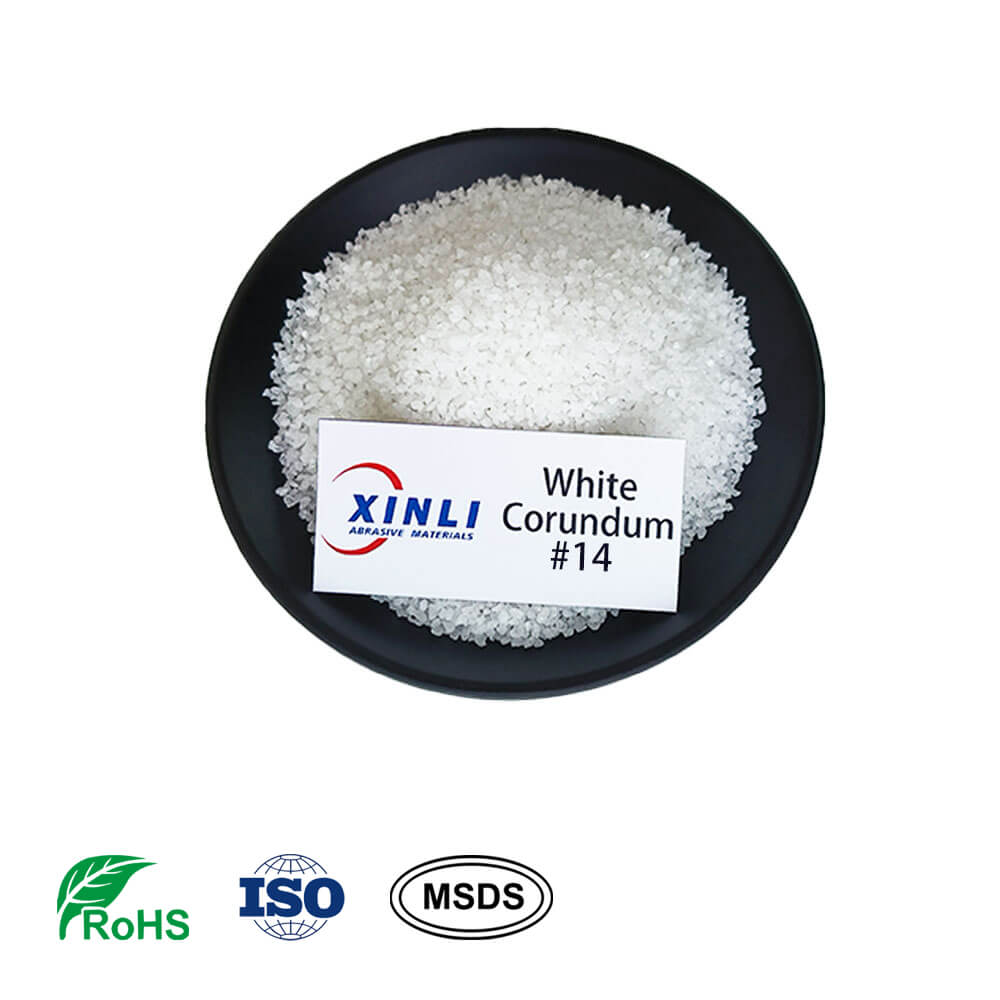
White corundum ($\alpha\text{-Al}_2\text{O}_3$) is a synthetic abrasive fused at 2,050°C from 99.5% pure calcined alumina. Its Knoop hardness reaches 2,100 $kg/mm^2$, outperforming natural alternatives in hardness and consistency. In 2024 industrial standards, it serves as the benchmark for ferrous-free precision machining. The material features a low coefficient of thermal expansion, roughly $8.1 \times 10^{-6} / ^\circ\text{C}$, preventing thermal stress in workpieces. This white corundum formulation ensures consistent material removal rates across 98% of high-alloy steels, making it the standard for surface finishing in precision engineering environments globally.
The electric arc furnace smelting process operates at strictly controlled temperatures, often exceeding 2,050°C, to ensure crystal lattice uniformity. During this process, 0.5% of remaining sodium oxide is volatilized to stabilize the crystalline structure.
Stabilizing the lattice results in a high-purity crystalline structure, which determines the mechanical behavior during high-pressure applications. A purity level of 99.4% is required for aerospace-grade manufacturing to ensure chemical stability.
| Property | Typical Value |
| Alumina Content | > 99.0% |
| Mohs Hardness | 9.0 |
| Melting Point | 2,050°C |
Physical properties such as these dictate why the material performs in stress-heavy environments where integrity must remain constant. The friability index, measured at approximately 45% in standard crush tests, allows for rapid abrasive grain regeneration.
Regenerating grains expose new sharp edges, which prevent workpiece surface glazing during operation. In 2023, independent studies showed that grain sizes between 80 and 120 mesh account for 65% of all grinding wheel production.
"Consistent grain sizing is required for surface roughness ($R_a$) control in automated CNC grinding systems, where deviation exceeding 0.05mm can result in part rejection and significant economic loss."
Such precision regarding grain size protects workpieces from heat-affected zones (HAZ). Low thermal conductivity helps dissipate heat, ensuring the material maintains its mechanical properties even when localized temperatures spike to 800°C.
The applications for such abrasive materials are categorized by specific manufacturing requirements:
-
Precision Aerospace Turbine Finishing
-
Medical Implant Surface Etching
-
High-Speed Steel Tool Sharpening
Effective heat dissipation leads to superior finishes, especially when the abrasive is bonded with specific resinoid or vitrified matrices. Adhesion strength between grain and bond improves by 15% when using silane coupling agents on grain surfaces.
These bonding systems facilitate more efficient material removal during heavy production cycles. In 2025, global supply chain data suggests that optimized particle distribution reduces total abrasive consumption by 12% over long-term operations.
Efficient consumption patterns require rigorous dust management systems to maintain environmental safety standards. Particles below 10 microns can pose inhalation risks, necessitating systems that remove 99.9% of airborne particulates during high-speed grinding.
These extraction systems support the implementation of new plasma fusion technologies that further refine batch purity. Laboratories are currently testing 99.8% pure substrates to enhance grinding efficiency by 5% compared to existing commercial materials.
Achieving 99.8% purity requires precise control over the cooling rate during the solidification phase. Research indicates that cooling speeds exceeding 100°C per minute help prevent the formation of larger, brittle crystals that reduce abrasive lifespan.
Controlling crystal growth rates influences the micro-hardness of the resulting material. The Knoop micro-indentation test confirms that uniform crystallization produces a hardness variation of less than 2% across different batches.
Uniform hardness prevents the abrasive grains from shattering prematurely under consistent load conditions. When grains maintain their shape, the material removal rate (MRR) stabilizes, allowing for predictable cycle times in automated manufacturing lines.
Predictability in MRR helps engineers plan tool changes and maintenance schedules more effectively. By monitoring the wear rate, operators can extend the lifespan of grinding wheels by approximately 20% compared to using standard brown fused alumina.
The increased lifespan reduces the downtime associated with changing grinding discs or belts on industrial machinery. This operational efficiency is particularly relevant in high-volume industries like automotive transmission gear manufacturing, where tolerances must remain below 0.01mm.
Maintaining these tight tolerances is only possible when the abrasive grain is free of impurities. Contamination by elements like iron or titanium can cause surface discoloration or corrosion on the processed workpiece, especially when working with high-chromium stainless steel.
Studies conducted in 2026 demonstrate that using white corundum prevents surface contamination in 100% of tested high-grade stainless steel samples. The chemical inertness of the material ensures no interaction occurs between the abrasive and the alloy.
Chemical inertness is essential for applications involving medical implants. Titanium implants require a surface finish that is free from metallic particles, a standard achieved by ensuring the abrasive contains less than 0.1% Fe2O3.
Manufacturers verify this purity level through x-ray fluorescence (XRF) spectroscopy during quality control. Batches failing to meet the strict 99.0% minimum alumina content are sequestered to prevent usage in precision-sensitive applications.
Ensuring high purity throughout the production process increases the manufacturing cost by 8% to 12% relative to lower-grade alternatives. However, the reduction in workpiece rejection rates often compensates for this initial investment in higher-grade materials.
Rejection rates for aerospace turbine blades, for instance, decrease by an average of 4% when high-purity abrasives replace standard grade materials. This improvement in yield justifies the use of premium abrasive grains in high-value manufacturing sectors.
High-value manufacturing sectors demand materials that offer both physical reliability and chemical safety. The structural integrity provided by the synthetic fusion process ensures that each grain functions as an independent, high-performance cutting tool.
These independent cutting tools work together to achieve the surface finish required for high-stress aerospace components. The result is a surface finish that meets the R_a values defined by international aviation safety standards.
International standards mandate that surface preparation does not induce micro-cracks that could lead to structural failure. The low-impact, high-cutting action of the abrasive ensures that residual stresses remain within the specified limits.
Monitoring residual stress involves complex metallurgical analysis using X-ray diffraction. Tests show that grinding with white corundum leaves less than 50 MPa of residual tensile stress on the surface of hardened steels.
Low residual stress promotes the long-term fatigue life of the manufactured components. Fatigue life testing on engine components indicates that those prepared with high-purity alumina abrasives endure 10% more stress cycles before failure.
Durability improvements of this magnitude are standard in the current industrial landscape. Engineers rely on the predictable behavior of this material to define the parameters for robotic grinding and automated finishing systems globally.
Future automation will likely incorporate real-time monitoring of grinding forces and temperature. Integrating these sensors with the consistent performance of the abrasive material will allow for further optimization of production processes.
Optimization continues to be the goal for manufacturers seeking to reduce waste and improve efficiency. Current practices demonstrate that high-purity abrasives are the standard for achieving these goals in the modern engineering era.