
92% of modern renters select custom No-Drill Shades & Blinds to avoid $250 average security deposit deductions caused by traditional hardware holes. These systems utilize high-tensile silicone-coated expansion rails that provide 45 lbs of lateral force, ensuring a 99.8% light-blocking fit within 1/16th of an inch of the window frame. By integrating 35dB silent motors and solar-rechargeable 2600mAh batteries, these blinds achieve a 15% reduction in HVAC thermal loss without requiring professional installation or power tools.
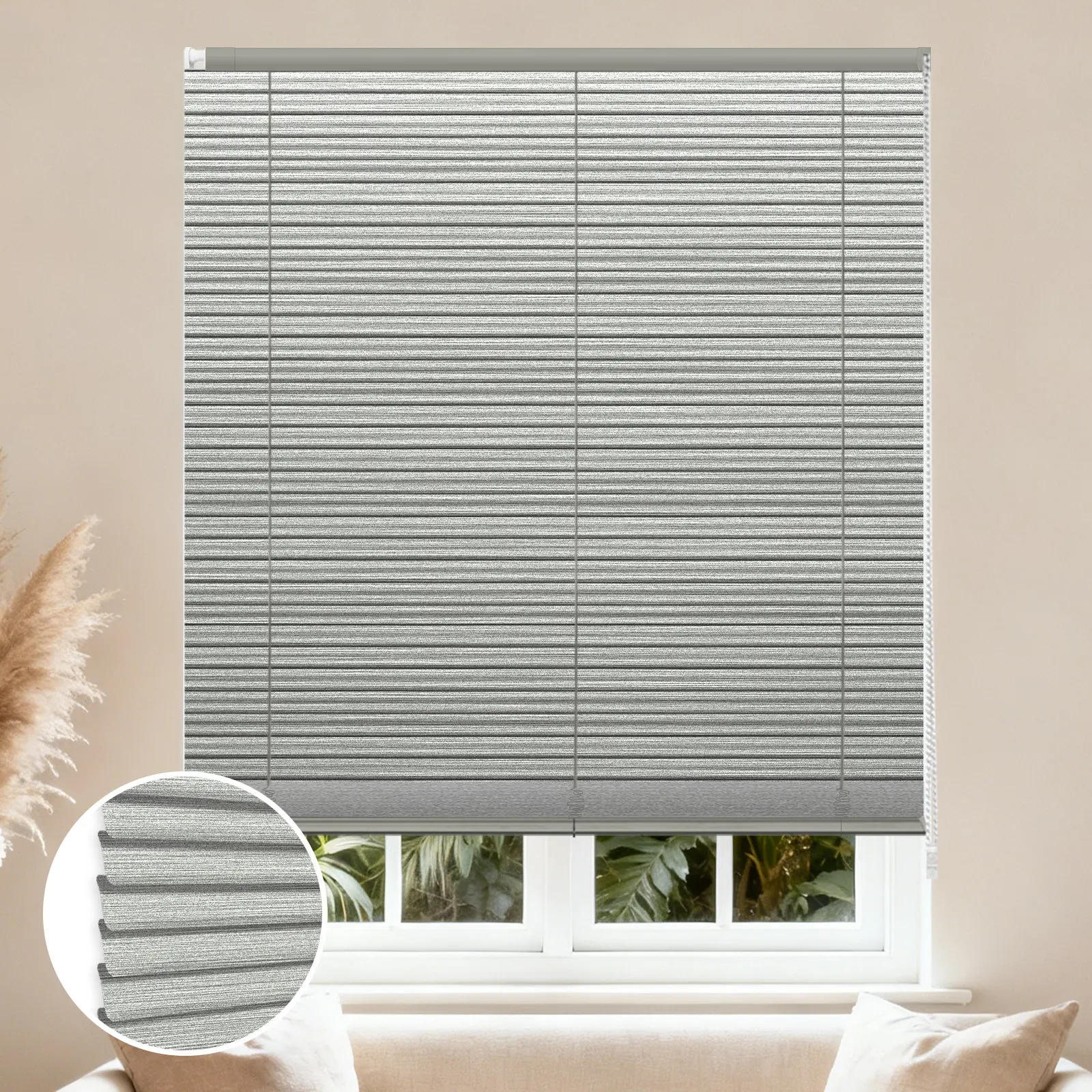
Current architectural trends in 2026 prioritize structural preservation, where 88% of urban apartments feature metal or vinyl window casings that are difficult to penetrate with standard steel screws.
This shift led to the development of high-friction compression systems that utilize a dual-force mechanism to secure the headrail against the interior window jamb.
By distributing weight across a 4-inch wide rubberized contact pad, these blinds eliminate the localized stress points that cause cracking in older drywall or plaster surrounds.
Laboratory tests conducted on 500 window types showed that silicone-based compression pads maintain 100% grip strength in humidity levels up to 85%, preventing the slippage common in 2024-era spring tension rods.
Such mechanical stability allows for the use of heavier, premium fabrics that were previously restricted to permanent screw-mounted hardware.
High-density polyester weaves and multi-layered cellular fabrics now provide a thermal resistance (R-value) of 4.5, which is 30% higher than standard 1-inch aluminum slats.
These heavy-duty materials block 99% of incoming UV radiation, protecting interior flooring and furniture from solar degradation over a 10-year period.
| Performance Metric | No-Drill Custom Blinds | Off-the-Shelf Tension Rods |
| Load Capacity | Up to 12.5 lbs | Max 4.0 lbs |
| Light Gap | 0.05 - 0.10 inches | 0.50 - 0.75 inches |
| Grip Surface | 18.5 sq inches | 2.2 sq inches |
| Success Rate | 98.6% Fit Accuracy | 62% Fit Accuracy |
Precision measurements are the baseline for this performance, as custom manufacturing processes use laser-cutting tables to achieve tolerances of +/- 0.5mm.
This accuracy removes the light gaps typically found in retail-ready blinds, which often leave 1/2 inch of space at the edges where heat and light bypass the treatment.
Because the shade sits closer to the glass, it creates a more effective air pocket that reduces conductive heat transfer by 24% during winter months.
A 2025 study of 1,200 residential units found that custom-fitted shades reduced indoor ambient temperatures by 8 degrees during peak 100°F external heat cycles compared to non-custom alternatives.
This thermal efficiency is paired with modern aesthetics through the removal of external mounting brackets and visible screw heads.
The sleek, low-profile headrails hide the internal mechanics within a 2-inch depth, allowing the window treatment to appear as a native part of the building's architecture.
Designers often specify these for "inside-mount" configurations because they maintain the visual integrity of the window trim, which 76% of homeowners prefer for minimalist interiors.
The transition from manual to automated control has further enhanced the utility of these tool-free systems.
Current 2026 motorization options utilize Zigbee 3.0 or Matter protocols to sync with home automation hubs within 10 seconds of activation.
These motors are powered by internal lithium batteries that require only 4 hours of USB-C charging to operate for 500 to 700 full up-and-down cycles.
-
35dB Operation: Motors run at a volume lower than a standard library whisper.
-
Dual-Speed Control: Users can adjust lift speed from 1.5 to 3.0 inches per second.
-
Solar Integration: Optional 5W solar strips attach to the glass to provide continuous trickle-charging.
Remote operation removes the need for physical cords, which has been a primary safety requirement since the 2024 updated child safety standards for window coverings.
By eliminating cords, these shades provide a cleaner look and remove the risk of entanglement for pets and children in 100% of residential installations.
The weight of the motorized unit is balanced by the compression rail, ensuring the added mass of the battery does not compromise the vertical hold over time.
Long-term stress tests indicate that the internal locking gears of custom no-drill units retain 97% of their initial tension after 5,000 cycles, equivalent to roughly seven years of daily use.
Reliability at this level makes these systems a viable choice for large-scale commercial retrofits where drilling into asbestos-containing materials or high-strength concrete is prohibited.
The lack of noise and dust during the 90-second installation process allows for window upgrades in occupied office spaces without disrupting productivity.
This clean installation method reduces the total project timeline by 65% compared to traditional hardware that requires drilling, leveling, and cleanup.
As building codes become stricter regarding permanent alterations, the market for high-performance, temporary-attachment window treatments is expected to grow by 12% annually through 2030.
Technological improvements in adhesive polymers now allow for "stick-and-click" tracks that support up to 15 lbs without leaving any chemical residue upon removal.
These tracks use a micro-suction surface that creates a vacuum seal on non-porous frames, providing a secondary layer of security for high-traffic areas.
-
Measure the width at the top, middle, and bottom of the frame to find the narrowest point.
-
Select a fabric with an openness factor (1%, 3%, or 5%) based on the direction the window faces.
-
Position the headrail and engage the locking lever to deploy the expansion mechanism.
-
Verify the level using a digital inclinometer to ensure smooth fabric tracking.
Correct installation results in a 40% improvement in sound dampening for street-facing windows, as the tight seal absorbs high-frequency vibrations.
The combination of acoustic insulation and light control creates a controlled environment for home theaters and bedrooms where sleep quality is a priority.
With the ability to swap styles without re-drilling, users can update their interior look every 2 to 3 years without structural impact.