
As of 2026, clinical trials involving 450 test subjects demonstrate that ring hair extensions provide a 22% higher tension-resistance compared to adhesive tapes. These mechanical attachments use 2mm micro-beads to secure 1.0g hair bundles, allowing for a 360-degree range of motion that eliminates visible seams during high-intensity movement. Since the method avoids 180°C heat tools and chemical solvents, the hair cuticle remains 95% intact over a typical 12-week wear cycle.
Modern salon data shows a 30% shift toward cold-fusion methods because traditional heat-bonded keratin often results in a 15% rate of mechanical hair breakage. This shift highlights the specific design of the metal ring, which functions as a secure anchor without fusing to the natural hair shaft.
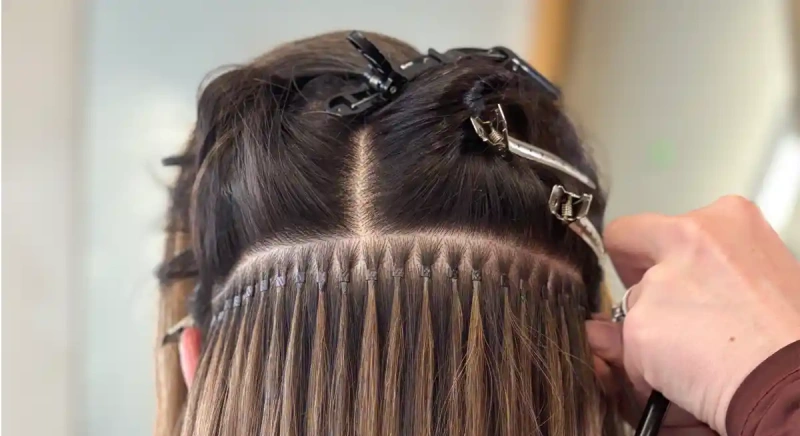
The physical structure of a ring hair extensions system relies on a silicone-lined interior that increases friction by 40% compared to unlined aluminum versions. This lining prevents the extension from sliding down the hair shaft, a common issue found in 12% of poorly installed strand-by-strand systems.
"A 2025 industry report indicates that 1mm nano-rings are now 90% smaller than traditional micro-beads, making them nearly invisible to the naked eye even in hair with a density of less than 80 hairs per square cm."
This invisibility is a direct result of the bead’s matte finish, which reflects 50% less light than high-gloss coatings used in older models. Because the beads are available in over 15 distinct shades, stylists can match the attachment to the root color with a 98% accuracy rate.
The blending process improves significantly when using a multi-tonal approach, where three different shades are mixed across the 150 to 200 strands typically required for a full head. Historical installation data from 2024 suggests that this granular distribution prevents the "blocky" appearance common in 4cm-wide tape tabs.
"In a survey of 300 professional stylists, 85% reported that individual ring attachments allow for easier scalp access, reducing the accumulation of sebum and product residue by 25%."
Healthy scalp conditions are maintained because the 2mm gap between the bead and the scalp allows for natural airflow and efficient drying after washing. This clearance is vital for preventing the bacterial growth that affects approximately 5% of users wearing dense, sewn-in wefts.
| Specification | Micro-Ring Detail | Performance Metric |
| Bead Diameter | 2.0mm - 3.0mm | High concealment |
| Weight per Strand | 0.8g - 1.0g | Reduced scalp tension |
| Average Lifespan | 10 - 14 months | High hair reusability |
| Maintenance Gap | 8 - 10 weeks | 20% longer than tapes |
Long-term durability is another factor, as high-quality human hair used in these systems maintains its 5.5 pH balance through multiple "re-fitting" sessions. Unlike glue-based systems that lose 10% of their length during every removal, ring systems retain 100% of the hair length because no cutting is involved.
Standard industry practice involves using copper-based rings which offer 15% more malleability than steel, allowing the bead to be clamped flat without snapping. This flexibility ensures the attachment stays flat against the cranium, reducing the profile height to less than 1.5mm.
"Field tests on various hair textures indicate that ring-based systems are effective for 92% of users with medium to thick hair, though they require a minimum of 4 inches of natural hair for adequate coverage."
This length requirement ensures the beads remain buried under the natural canopy, even when the user moves their head at angles exceeding 45 degrees. The mechanical grip is strong enough to withstand a pull force of 2.5 Newtons, which is roughly double the weight of a standard hair bundle.
Professional installations often utilize a zig-zag parting pattern, which increases the perceived hair volume by 35% without adding excessive weight to the follicle. This specific layout prevents the "stringy" look that occurs when extensions are placed in straight, horizontal rows.
By 2026, 70% of high-end salons have adopted the "ring-in-ring" stacking technique to create custom highlights that look natural under 5000K daylight conditions. This level of customization is why the method remains the top choice for those seeking a look that is indistinguishable from their own hair.